


A retail brand can have accurate information in its internal location database and still send customers to the wrong place. A holiday schedule gets approved by operations, but only some platforms receive it. A relocated store keeps its old phone number on a niche directory. A duplicate profile appears after a system migration, while a local manager changes the category without notifying corporate marketing. Customers see fragments of the truth, and the brand owns the resulting confusion.
That's the operational reality behind local listings management. It isn't a one-time directory submission exercise. It's the discipline of keeping location data accurate, authorized, synchronized, measurable, and compliant across the platforms customers use to find and evaluate businesses.
The strongest programs treat listings as shared operational infrastructure. Marketing manages discoverability, operations owns business changes, local teams contribute context, and technology provides the controls that prevent unauthorized or incomplete updates. Accuracy remains essential, but governance determines whether accuracy survives contact with a large organization.
Table of Contents
- Build a field-to-action model
- Test operations instead of claiming causation
- Measure quality and revenue separately
- Pitfall one is treating completeness as the outcome
- Pitfall two is creating duplicates during change
- Pitfall three is publishing without verification
- Pitfall four is leaving suppression until the end
- Pitfall five is giving local teams either too much or too little control
What Local Listings Management Actually Is
Consider a multi-location retailer with stores spread across several markets. Its address, phone number, opening hours, categories, services, photos, and landing-page URLs exist in a central database, but customers don't search that database. They search Google Maps, Apple Maps, Bing, Facebook, Yelp, local directories, and industry-specific publishers.
Each platform may hold a slightly different version of the location. One profile contains the old hours. Another has a local phone number. A third has a customer-uploaded photo that makes the store appear closed or moved. Nobody deliberately created the inconsistency. It emerged because several systems accept edits, import data, and apply their own verification processes.
Google explains that local listings can use publicly available web content, licensed third-party data, and user-contributed facts, including addresses, phone numbers, photos, videos, and reviews. Google also says a listing may appear in Search and Maps even when the owner hasn't directly supplied every field, because the system aggregates and normalizes information from multiple sources. That makes listings management a distributed data-quality problem, not a task confined to one directory (Google's explanation of local listing data).

The listing is more than NAP data
Name, address, and phone number still matter, but modern profiles carry much more operational information. Hours, holiday hours, categories, attributes, services, menus, booking links, accessibility information, photos, and location-specific URLs can determine whether a customer considers a location relevant and usable.
The distinction matters because a profile can be technically present while still failing the customer. A clinic with the right address but no appointment link creates friction. A restaurant with a correct phone number but an outdated menu creates disappointment. A retailer with accurate hours but a missing accessibility attribute may lose a visit before the customer reaches the store.
The practical standard is not “the profile exists.” It's “the profile provides enough reliable context for the intended customer action.”
Why stale information persists
Listing platforms don't behave like passive storage systems. They ingest external information, accept suggested edits, publish changes at different speeds, and sometimes require verification before an update becomes visible. Aggregators and secondary publishers add another layer, because one correction may pass through several systems before reaching the final surface.
That's why manual editing often produces temporary improvement rather than durable control. A marketer fixes Google, but a conflicting source later reintroduces an old phone number. A location manager creates a new profile instead of claiming an existing one, producing a duplicate. A closed location remains visible because suppression wasn't included in the closure process.
The history of Google's product, from the older Google My Business era to the current Google Business Profile and New Merchant Experience workflow, also shows why ownership and verification are operational milestones rather than administrative details. The organization needs to know who controls each profile, which team can request changes, and how access is recovered when staff or franchise relationships change.
Practical rule: A listing should have an owner, a source record, a change process, and a recovery path. Without all four, accuracy depends on individual memory.
The scale of the ecosystem reinforces the point. One 2026 industry guide cites more than 200 million Google Business Profile listings globally, with about 28,000 new profiles created daily, while reporting that roughly 76% of profiles are verified, up from 71% in 2024 (the guide's Google Business Profile market figures). Those figures describe a large and continually changing environment, not a static list a team can clean once and forget.
Local listings management therefore combines data stewardship, access control, publishing, monitoring, and measurement. Accurate profiles are now the baseline for credible local discovery. Competitive advantage comes from making that baseline reliable at scale, then connecting listing activity to customer behavior.
Platform Inventory and Ecosystem Roles
A listings program becomes easier to manage when each platform has a defined role. Google Business Profile usually receives the greatest operational attention because it connects directly to Google Search and Maps. Apple Business Connect matters for Apple Maps and the wider Apple device ecosystem. Bing Places supports Bing surfaces, while Facebook, Yelp, and industry directories contribute discovery, reviews, referral traffic, and data that other systems may use.
The right question isn't “How many directories has the brand submitted to?” It's “Which sources influence discovery, trust, conversion, or downstream data quality in each market?”
A working platform map
| Platform type | Primary role | Typical fields | Main operational concern |
|---|---|---|---|
| Google Business Profile | Search and Maps discovery | Name, address, phone, hours, categories, attributes, photos, services | Verification, suggested edits, duplicates, frequent profile changes |
| Apple Business Connect | Apple Maps presence | Location details, hours, categories, brand information | Ownership and location accuracy within Apple's ecosystem |
| Bing Places | Bing search and map discovery | Core business data, hours, website, categories | Separate access and update handling |
| Social discovery and customer interaction | Address, hours, phone, page details, photos | Local page ownership and consistency with brand records | |
| Yelp | Reviews and local discovery | Business details, categories, hours, photos | Review context, duplicate profiles, category accuracy |
| Industry directories | Specialized discovery and trust | Services, credentials, specialties, location data | Field requirements and category-specific rules |
| Data aggregators | Distribution to secondary publishers | Core location data and selected attributes | Update latency, field loss, and conflicting source records |
This table is a planning tool, not a universal priority list. A healthcare group may place greater emphasis on specialty directories and appointment information. A restaurant brand may prioritize menus, ordering links, and holiday hours. A service-area business may need a different configuration from a retailer with a staffed storefront.
Primary publishers and aggregators also play different roles. A direct connection to a publisher can provide more control over fields and verification, while an aggregator can extend coverage across a wider network. The trade-off is that intermediary systems may not preserve every attribute, and updates can arrive on different schedules. A team that treats every publisher as an identical endpoint will miss those differences.
Where conflicts enter the graph
Conflicts often begin at handoff points. A point-of-sale system changes the store phone number, the website keeps the previous number, a local manager edits Facebook, and a directory imports information from an older source. Each system appears reasonable in isolation. Together, they create a record that no customer can confidently interpret.
The fix starts with field ownership. The central location record should identify which system controls the address, which team approves hours, who can edit local services, and whether photos require brand review. Without that mapping, a synchronization tool may only distribute uncertainty faster.
Search and map surfaces also continue to change. For example, marketers tracking Google's product development can review the update on scrollable sitelinks to Maps ads as a reminder that local discovery features can connect organic location information with paid search experiences. The operational lesson is broader than any single feature. Listing data may influence several customer journeys, so platform inventory should include both visibility and conversion context.
Choosing priority without chasing coverage
A brand shouldn't invest equally in every platform. Priority should reflect customer behavior, category requirements, publisher influence, and the cost of an incorrect field.
A useful sequence is:
- Claim and verify the platforms that drive the largest share of local discovery.
- Secure industry and category-specific profiles where customers compare providers.
- Identify aggregators that feed important secondary publishers.
- Monitor smaller sources when audits show recurring errors or meaningful referral activity.
- Retire channels that create maintenance effort without customer or data value.
Coverage is not the same as quality. A hundred unmonitored profiles can create more risk than a focused network with clear ownership, complete fields, and reliable update controls.
Building a Governance Framework That Actually Works
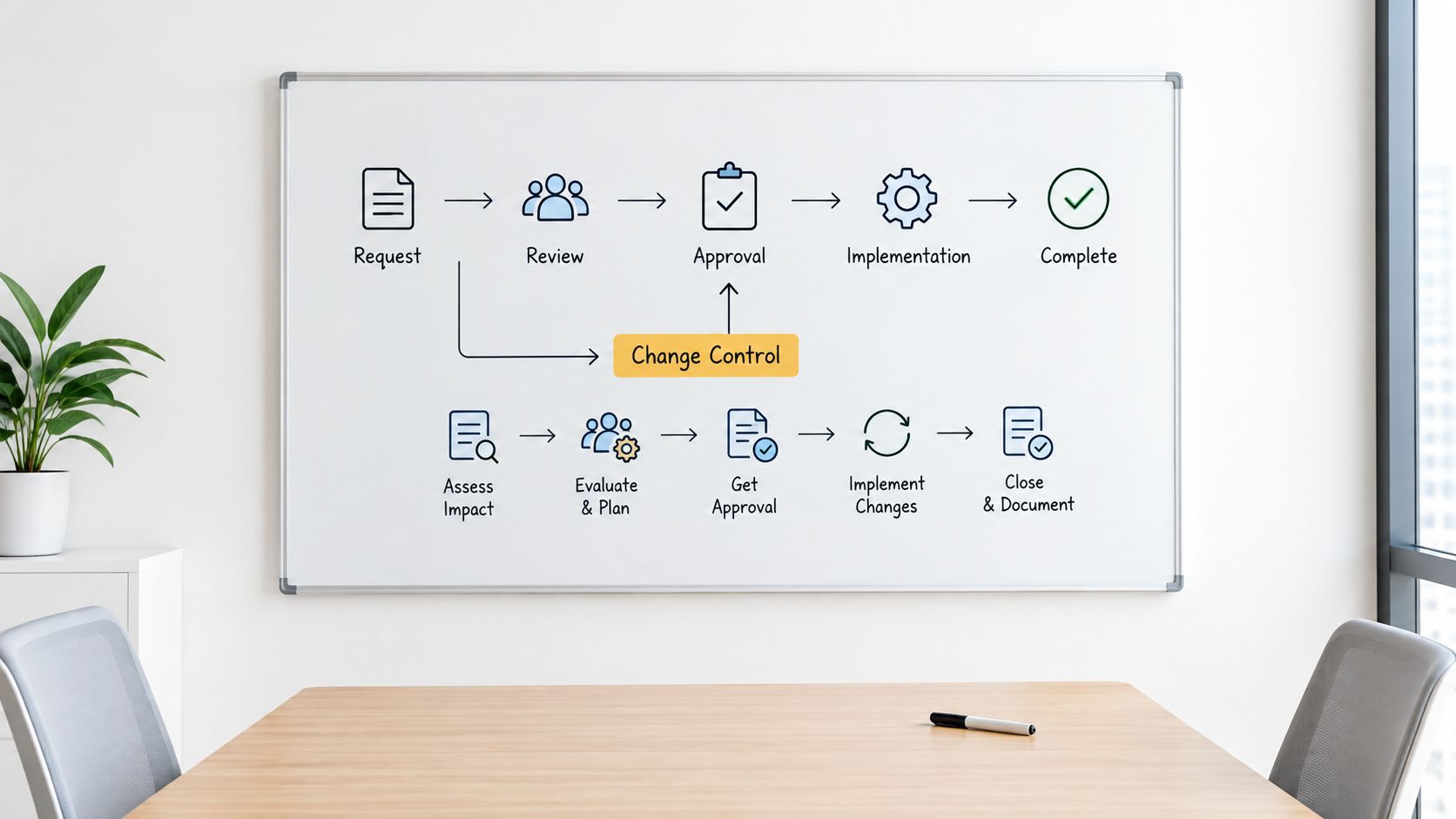
Technology can publish a change, but governance decides whether the change is legitimate. Multi-location brands usually struggle when corporate marketing, regional operations, franchise owners, and local managers all have partial authority without a shared approval model.
A workable framework assigns permissions by field and event, not just by location. A local manager may propose a temporary hours change, while corporate operations approves a permanent address change. A franchise owner may maintain local photos, while brand marketing controls the business name and primary category. The system needs to reflect those distinctions.
Start with a source-of-truth register
The source register should list every location and the systems that own its critical fields. It should also record profile IDs, verification status, primary contacts, opening and closure dates, approved categories, and escalation paths.
This register doesn't have to live in one specialized platform. It can begin as a controlled operational database, provided it has version history, named owners, and a clear process for rejecting conflicting edits. The important point is that a publishing tool shouldn't become the accidental source of truth just because it was purchased first.
Data disagreements need a decision rule. For example, operations may own permanent hours, the location manager may propose temporary changes, and legal or compliance teams may approve regulated service descriptions. The rule should identify the final approver rather than asking every team to reach consensus on every update.
Use role-based permissions
A practical model separates four types of access:
- Corporate control covers brand name, primary categories, legal identity, ownership, publisher relationships, and permanent location status.
- Regional control covers market-specific services, escalation, local campaigns, and approval of changes that affect several locations.
- Location control covers photos, local posts, proposed hours changes, service availability, and factual corrections.
- System control covers integrations, API credentials, audit logs, field mappings, and synchronization rules.
Permissions should also distinguish between propose, approve, publish, and suppress. Combining all four powers in one account makes mistakes difficult to trace and increases the risk of unauthorized changes.
The workflow should capture what changed, who requested it, who approved it, which source record supplied it, when it was sent, and whether the publisher accepted it. This audit trail helps teams troubleshoot discrepancies and demonstrate control when listing data connects to regulated services, privacy-sensitive systems, or customer records.
Design event-based playbooks
Different business events need different procedures. A new location requires ownership, verification, category selection, address validation, local landing-page creation, and a launch review. A relocation requires coordinated updates and a duplicate check. A temporary closure requires dates, customer messaging, and a defined reopening step. A permanent closure requires suppression, redirects where appropriate, and removal from internal location feeds.
Suppression deserves special attention. Removing a location from the source database may not remove every public profile. Teams need a documented process for claiming, marking, closing, or requesting removal of profiles, followed by a verification check across priority publishers. Delayed suppression can leave customers navigating to a site that no longer serves them.
Change control should optimize for certainty, not raw publishing speed. A fast incorrect update creates more work than a verified update that reaches every required surface predictably.
The governance gap is widely recognized in local listings operations. Ownership can be slow to claim, internal systems can disagree, and updates can create or recreate duplicates when teams lack a coordinated process (the operational case for local listings governance). A governance framework addresses those failures before they become ranking, trust, or compliance issues.
Teams should also document exceptions. If a franchisee can override holiday hours, the exception needs a time limit and a review owner. If a regional team can change a service attribute, the organization should define which markets and categories qualify. Governance works when it makes decisions easier, not when it adds an approval meeting to every small edit.
For teams evaluating how platform changes affect local customer journeys, coverage of Yelp licensing reviews for ChatGPT also illustrates why source ownership and content accuracy increasingly matter beyond traditional search. The more systems reuse business information, the more valuable a defensible audit trail becomes.
How Synup Can Help
A dedicated platform becomes useful when a team has too many publishers, locations, reviews, approvals, and reporting tasks for manual coordination. Synup combines local listings, reputation management, social publishing, local SEO, store locators, landing pages, analytics, and an AI agent called Sydekick in one operating environment.
Its listings capabilities synchronize profiles across Google Business Profile, Apple Business Connect, Bing, Facebook, and more than 100 publishers, while audits identify discrepancies and support corrections. That breadth can reduce platform switching, but it doesn't eliminate the need for a reliable source register or approval policy. A system can distribute a bad record efficiently if governance is missing.
Sydekick is positioned around chat, memory, skills, playbooks, inference, approvals, and a complete audit trail. The useful distinction is that automation can propose or execute a sequence of tasks under explicit guardrails, rather than merely pushing a field from one database to another. Teams can also use review monitoring, drafted responses, review-generation flows, location-level social posts, rank tracking, and visibility insights without maintaining separate workflows for every channel.
The platform is a stronger fit for agencies, franchises, software providers, and multi-location brands that need scoped permissions, client portals, white-label deployment, branded reporting, and a command center across many locations. Its APIs, first-party MCP support, model connectors, and BYOK or BYOM options also suit teams that want to connect local marketing operations with existing AI or data workflows.
A smaller business with few locations and infrequent changes may not need that breadth. Direct publisher tools can be cheaper to operate when the data volume is low and one person can verify every change. Synup becomes more compelling when manual work, fragmented vendors, review delays, audit requirements, or inconsistent local execution create a recurring operational burden. More information about the platform and its current packaging is available from Synup, though capabilities and plan details may change.
Automation Tools and Integration Patterns
Automation isn't one thing. A managed listings platform, a custom API stack, and a spreadsheet-driven process can all be called automated, but they create very different responsibilities for the team operating them.
Direct publishing is the simplest model. A marketer signs into a platform, edits a profile, submits a change, and checks whether it appears. This approach gives the operator visibility into the publisher interface and works well for isolated corrections. It breaks down when the same field must be updated across many locations, when approvals involve several departments, or when the organization needs a reliable record of failed and delayed updates.
An API-led model starts with a central location database. Middleware translates internal fields into publisher-specific formats, adapters handle each endpoint, and monitoring captures acceptance, rejection, and latency. This architecture offers control and integration depth, but the brand owns maintenance, authentication, schema changes, error handling, and publisher exceptions.
Three practical architecture patterns
The central record pattern works when a brand has a dependable location system. The listings layer reads approved records and sends only permitted fields to publishers. It reduces contradictory edits, but it depends on clean source data and strong event handling.
The middleware pattern adds translation between systems. It can map one internal “temporary closure” status to the different fields and processes required by multiple publishers. This is useful when point-of-sale, store locator, customer data, and operations systems use different schemas.
The managed platform pattern delegates publisher connectivity, audits, permissions, and reporting to a vendor. This can reduce engineering work and speed deployment, but the brand must evaluate field coverage, approval controls, export options, support quality, and the vendor's ability to show what happened to each update.
The choice should follow operational complexity, not software fashion. A business with a stable source system and strong engineering team may justify direct integrations. A brand with changing publishers, limited engineering capacity, and a need for role-based workflows may benefit from a managed platform. A small operator may need neither and can maintain a disciplined manual process.
Connect operations to outcomes
The overlooked integration is often not publisher-to-publisher synchronization. It's the connection between listing changes and customer actions. Store locators, call tracking, booking systems, point-of-sale data, analytics platforms, and customer data platforms should share location identifiers. Without a consistent identifier, a call from a profile can't be reliably tied to the store that handled it.
The same logic applies to emerging search experiences. Coverage of Google's AI-powered local business calling feature shows why phone numbers, hours, service details, and availability need operational oversight. When a platform helps customers contact a business directly, a stale field can affect the transaction rather than merely the appearance of a profile.
A strong architecture records four events: the approved change, the publication attempt, the publisher response, and the downstream customer action. That sequence lets analysts distinguish a data problem from a visibility problem and a visibility problem from a conversion problem.
Measuring What Actually Moves Revenue
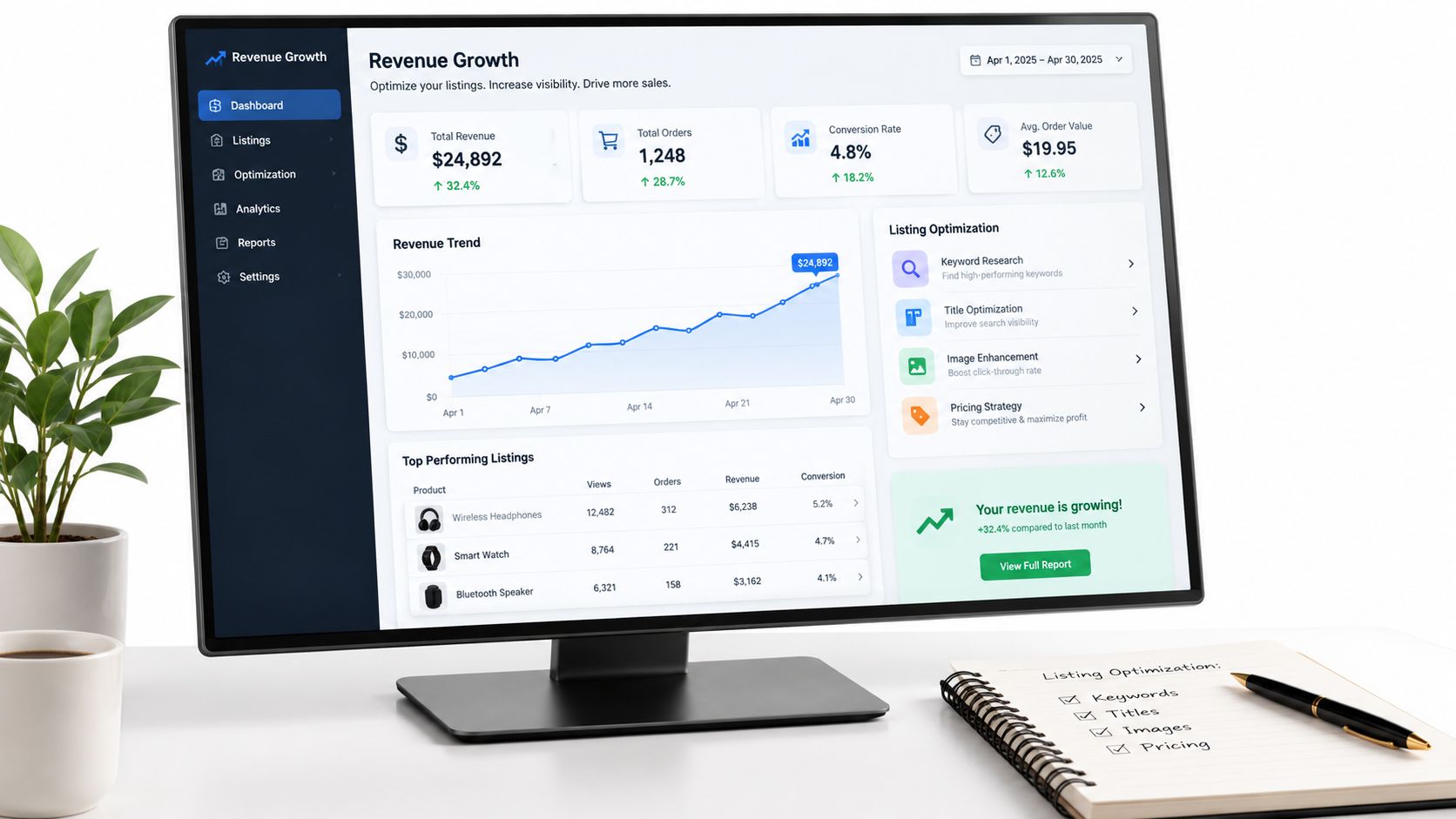
Profile views are useful context, but they aren't revenue. A listing can receive attention because it ranks for an irrelevant query, a customer can request directions without visiting, and a call can fail because the location lacks staff capacity. Measurement needs to connect a specific listing operation with a meaningful customer action.
The first step is to define the conversion for each location type. A retailer may care about calls, directions, store visits, or product availability checks. A clinic may care about appointment requests. A restaurant may care about reservations, orders, or calls. A service business may care about qualified leads rather than raw profile engagement.
Build a field-to-action model
Different fields influence different decisions. Hours affect whether a customer believes a visit is possible. Categories affect relevance. Services and attributes help customers determine fit. Photos can reduce uncertainty about the location. Booking, ordering, and appointment links shorten the path to action.
The measurement model should therefore group fields by customer job:
| Customer question | Listing signals | Useful outcome |
|---|---|---|
| Is this business nearby and relevant? | Category, address, service area | Discovery, profile engagement, qualified visits |
| Can the customer go now? | Regular and special hours | Calls, directions, visits, bookings |
| Does this location meet the need? | Services, attributes, menu, accessibility details | Clicks, calls, appointment or order actions |
| Can the customer trust the information? | Consistent core data, photos, reviews, ownership | Conversion rate, fewer correction contacts |
| Can the customer complete the next step? | Booking, ordering, appointment, or location-page links | Completed transactions or leads |
This isn't a universal attribution formula. It's a way to prevent teams from treating every field as equally important in every category.
Test operations instead of claiming causation
A listing change rarely happens in isolation. Paid media, seasonality, promotions, staffing, weather, local competition, and store performance can all affect customer behavior. A leadership report that attributes every movement to listings management will lose credibility.
A better approach compares locations or markets with similar conditions, documents the exact change, and observes the relevant outcome over an agreed period. For example, a team might prioritize correcting hours and appointment links in one group of locations while maintaining a comparable group under the existing process. The analysis should account for other campaigns and operational changes, then report the result with appropriate caution.
The test record should include:
- Baseline condition: The field status, profile completeness, and relevant customer outcomes before the change.
- Intervention: The exact correction, approval date, publisher submission, and visible publication date.
- Control context: Promotions, paid campaigns, closures, staffing changes, and other factors affecting the location.
- Outcome definition: The action that matters, such as qualified calls, bookings, orders, or visits.
- Review window: The period used to compare behavior before and after the intervention.
A failed test can still produce useful information. If correcting a field doesn't change downstream behavior, the issue may not be visibility. It may be offer quality, location capacity, landing-page friction, or demand.
Measure quality and revenue separately
Operational metrics answer whether the program is functioning. Business metrics answer whether customers respond. Both are necessary.
Operational measures include ownership coverage, profile completeness, error rate, duplicate count, approval time, update acceptance, and time to suppress a closed location. SOCi's 2026 Local Visibility Index reports 97.9% of claimed Google Business Profile locations and an 86.6% profile-completeness threshold across 2,751 brands and 42 subcategories, making near-complete coverage a useful market-floor benchmark rather than a guarantee of revenue (SOCi's local visibility benchmarks).
Business measures should include the actions tied to the category, such as calls, directions, bookings, orders, qualified leads, and completed transactions. Analytics become far more useful when every event carries a stable location ID and a source or campaign context.
A complete profile is an operational achievement. It isn't proof that the profile converts.
Teams should also examine update velocity. A brand may have excellent annual accuracy and still fail during the moments customers care about most, such as holiday closures, relocations, service outages, or temporary access restrictions. The relevant question is how quickly an approved change reaches priority surfaces and whether customers encounter the old information during the transition.
Incomplete analytics leave teams unable to distinguish profile interest from commercial impact. The case for API-led integration is strongest when it closes that gap by joining listing data with calls, visits, bookings, store-locator use, and transaction systems. A measurement program should tell leadership not only that listings are accurate, but which corrections changed customer behavior and where the next investment belongs.
Common Pitfalls and How to Avoid Them
The most dangerous assumption is that accurate data guarantees visibility. Accuracy removes friction and uncertainty, but relevance, proximity, category competition, reviews, platform rules, and customer demand still influence discovery. A team that reports only completion scores may declare success while calls, bookings, or visits remain unchanged.
Pitfall one is treating completeness as the outcome
Completion fields are easy to count. Revenue is harder to connect. Teams often fill every available attribute without checking whether the information is current, meaningful to customers, or tied to a conversion path.
The remedy is to rank fields by customer decision and location type. A restaurant should prioritize hours, menu access, ordering, and availability signals. A clinic may need specialties, insurance information, appointment pathways, and practitioner details. A retailer may focus on store access, departments, local inventory pathways, and holiday schedules.
Pitfall two is creating duplicates during change
Mergers, acquisitions, relocations, rebrands, and system migrations create ideal conditions for duplicate profiles. A new profile may look like a clean solution when an existing profile is difficult to claim, but it fragments reviews, weakens ownership, and confuses customers.
The operating procedure should require a duplicate search before any new profile is created. If a duplicate exists, the team should document its URL or identifier, determine the correct owner, and use the publisher's merge or removal process. New location launches should never bypass this check just because the opening deadline is close.
Pitfall three is publishing without verification
A submitted change isn't necessarily a live change. Publishers can reject, delay, alter, or partially accept updates. A dashboard that reports “sent” without confirming the visible result creates false confidence.
Every critical workflow needs a post-publication check. High-risk fields, including address, phone, hours, closure status, and primary category, deserve stronger monitoring than low-risk content. The audit log should preserve the previous value, approved value, submission status, and visible result.
Pitfall four is leaving suppression until the end
Closed locations often remain in feeds, websites, map results, and directory networks because closure is treated as an administrative cleanup task. Customers then call a disconnected number or travel to an empty storefront.
Closure playbooks should begin when the business decision is approved, not when a marketer notices the listing. The process should identify the final service date, temporary or permanent status, customer-facing message, website handling, publisher action, and owner responsible for verifying removal or closure.
Pitfall five is giving local teams either too much or too little control
A fully centralized model can miss local facts. An unrestricted local model can break brand consistency and create compliance risk. Neither extreme works well.
Controlled contribution is the better compromise. Local teams propose facts they can verify, corporate or regional owners approve sensitive fields, and every edit carries an accountable identity. Training should focus on common events, not just platform navigation.
A simple standard operating procedure can use this structure:
- Detect: Monitor publisher alerts, internal change requests, customer complaints, and scheduled audits.
- Classify: Label the issue as correction, new location, relocation, temporary closure, permanent closure, duplicate, or access problem.
- Approve: Route the request to the field owner and required reviewer.
- Publish: Send the change through the appropriate direct connection or managed workflow.
- Verify: Check the live publisher result and record any delay or rejection.
- Measure: Connect the change to the relevant customer action and review the result.
That process shifts local listings management from reactive editing to controlled operations. It also gives leadership a clearer explanation when a customer-facing error occurs.
Next Steps and Operational Playbooks
A practical rollout starts with governance, not software. Create a location register, assign owners to critical fields, document who can propose and approve changes, and audit the highest-risk profiles first.
A lightweight cadence can keep the program moving:
- Daily: Review urgent publisher alerts, closures, access issues, and high-impact customer corrections.
- Weekly: Check synchronization failures, rejected updates, duplicates, and recently changed hours or contact details.
- Monthly: Audit ownership, permissions, profile completeness, suppression status, and source-record conflicts.
- Quarterly: Compare listing operations with calls, bookings, visits, orders, leads, and location-level revenue indicators.
The business case should focus on prevented customer friction and measurable actions, not the number of directories touched. Operations leaders, franchise representatives, analytics owners, and local managers should each have a defined role in the rollout.
A team moving from reactive maintenance to strategic local search operations needs a reliable source of industry updates as platform behavior changes. For ongoing practitioner coverage, consult The Keyword's search and marketing reporting, then turn relevant platform changes into documented workflow decisions rather than one-off fixes.