







Google is replacing Dynamic Search Ads (DSA), a format that has been part of Search ads for years, with AI Max for Search.
Dynamic Search Ads have traditionally helped advertisers capture search demand by automatically generating headlines and directing users to relevant landing pages based on website content. This has been especially useful for advertisers with large inventories or frequently changing content.
Now, Google says it is moving away from that structure in favor of a more AI-driven approach. Advertisers can manually migrate voluntarily to AI Max, with automatic migration beginning in September. Once the automatic migration phase begins, new DSA campaigns can no longer be created in Google Ads, Google Ads Editor, or the Google Ads API. The company expects all eligible campaigns to finish migrating by the end of September.
The company is also moving tools such as automatically created assets and the campaign-level broad match setting to AI Max.
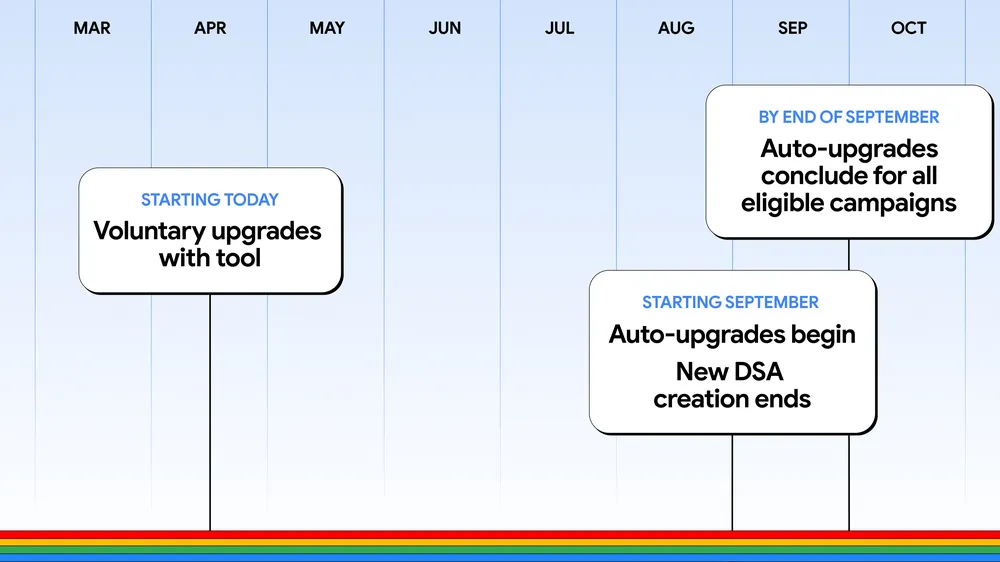
As part of the update, AI Max for Search campaigns will move out of beta. Google previously rolled out the feature to all advertisers in beta last year. The new change was confirmed in an X post by a Google Ads Liaison.
What AI Max Changes for Advertisers
According to Google, AI Max will take over core DSA functions while expanding how campaigns are built and optimized. Instead of relying mainly on indexed website pages, AI Max uses a broader set of signals to match ads to search queries.
The system handles targeting, creative generation, and delivery decisions within Search campaigns. With AI Max, the system analyzes an advertiser’s website, existing campaign assets, and user intent signals simultaneously. It determines which searches to match, generates headlines from available content, and selects the most relevant landing page for each query.
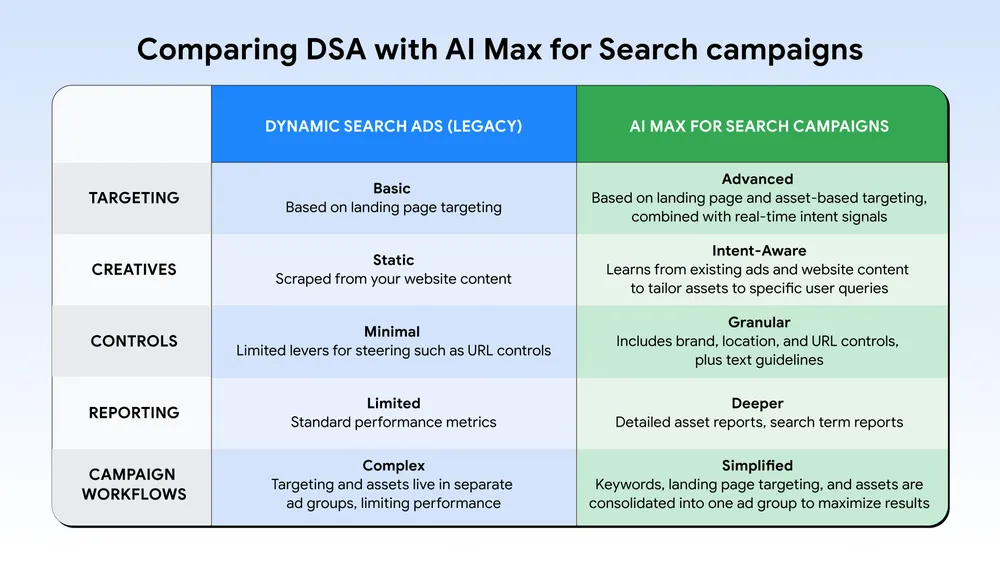
The system can interpret website data more broadly rather than matching strictly to page-level indexing, as DSA does. For advertisers, this means less manual control over targeting structures and greater reliance on automated decision-making.
How the Shift Changes Targeting and Campaign Structure
The move from DSA to AI Max changes how advertisers approach targeting. DSA allows advertisers to guide performance by selecting specific parts of a website or excluding sections. AI Max reduces that level of control and shifts more decision-making to the system.
Google says AI Max does not depend on keyword lists or strict URL targeting. Instead, it uses intent signals, content understanding, and historical performance data to determine when ads should appear. This approach is being framed as a new way to match queries in Search, reinforced by Google introducing AI Max as a new match type within Google Ads.
Advertisers running active Dynamic Search Ads should identify those campaigns now and review the voluntary upgrade flow to confirm what carries over. Google says re-auditing negative keyword lists is worth doing before either migrating manually or accepting the automatic upgrade, since AI Max decides search matches from site content rather than advertiser-defined keywords.
Google’s Broader Automation Push
This change fits into Google’s ongoing shift toward automation in Search advertising. In recent years, the company has reduced reliance on manual keyword targeting and increased the role of machine learning in campaign execution.
Dynamic Search Ads were an early form of automation in Search. AI Max extends this by combining targeting, creative generation, and optimization into a single system.
The company has been positioning AI Max as a central part of it search advertising strategy. In August last year, Google introduced a unified reporting view that shows how queries, creatives, and signals contribute to campaign outcomes.

What Khris Garrett thinks brands should understand about Google’s shift from Dynamic Search Ads to AI Max: control vs automation trade-off.
“The real issue is control. DSAs gave advertisers a direct relationship between their site content and their ad targeting. Al Max hands more of that to Google's models. If your account has clean structure, strong historical data, and tight conversion tracking — you'll likely benefit. If not, you're handing the wheel to a system that doesn't know your margins, your seasonal priorities, or your brand constraints.”

Recap
What is Google replacing Dynamic Search Ads with?

Google is replacing Dynamic Search Ads with AI Max for Search. AI Max is a set of AI features that run inside a standard Google Search campaign and use the advertiser's website, existing ads, and existing keywords to decide which searches to serve on, generate headlines and descriptions, and select the landing page that receives the click. Google says advertisers can migrate voluntarily now, with automatic migration beginning in September 2026.
When does Google stop allowing new Dynamic Search Ads campaigns?
According to Google, once automatic migration begins in September 2026, advertisers will no longer be able to create new Dynamic Search Ads campaigns in Google Ads, Google Ads Editor, or the Google Ads API. The company expects all eligible campaigns to finish migrating to AI Max by the end of September.
What should advertisers do before the automatic migration to AI Max?
Advertisers should identify every active Dynamic Search Ads campaign now and review the voluntary upgrade flow inside Google Ads to confirm what settings carry over. Google says re-auditing negative keyword lists is worth doing before migration, since AI Max decides search matches from site content rather than advertiser-defined keywords.