








Google expanded its branded queries filter to all eligible sites in Search Console on March 11, replacing the need for manual regex filters to separate brand traffic from organic discovery. The feature, originally announced in November 2025 on the Google Search Central Blog, uses an AI-assisted classification system that automatically identifies branded searches, including misspellings and brand-related product names.
How the branded queries filter works
The filter classifies every search query as either branded or non-branded using AI, not regex or keyword matching. Branded queries include the brand name itself, common misspellings (such as "Gogle" for Google), and brand-related products and services (such as "Gmail" for Google). That automated classification catches edge cases that manual filters routinely miss.
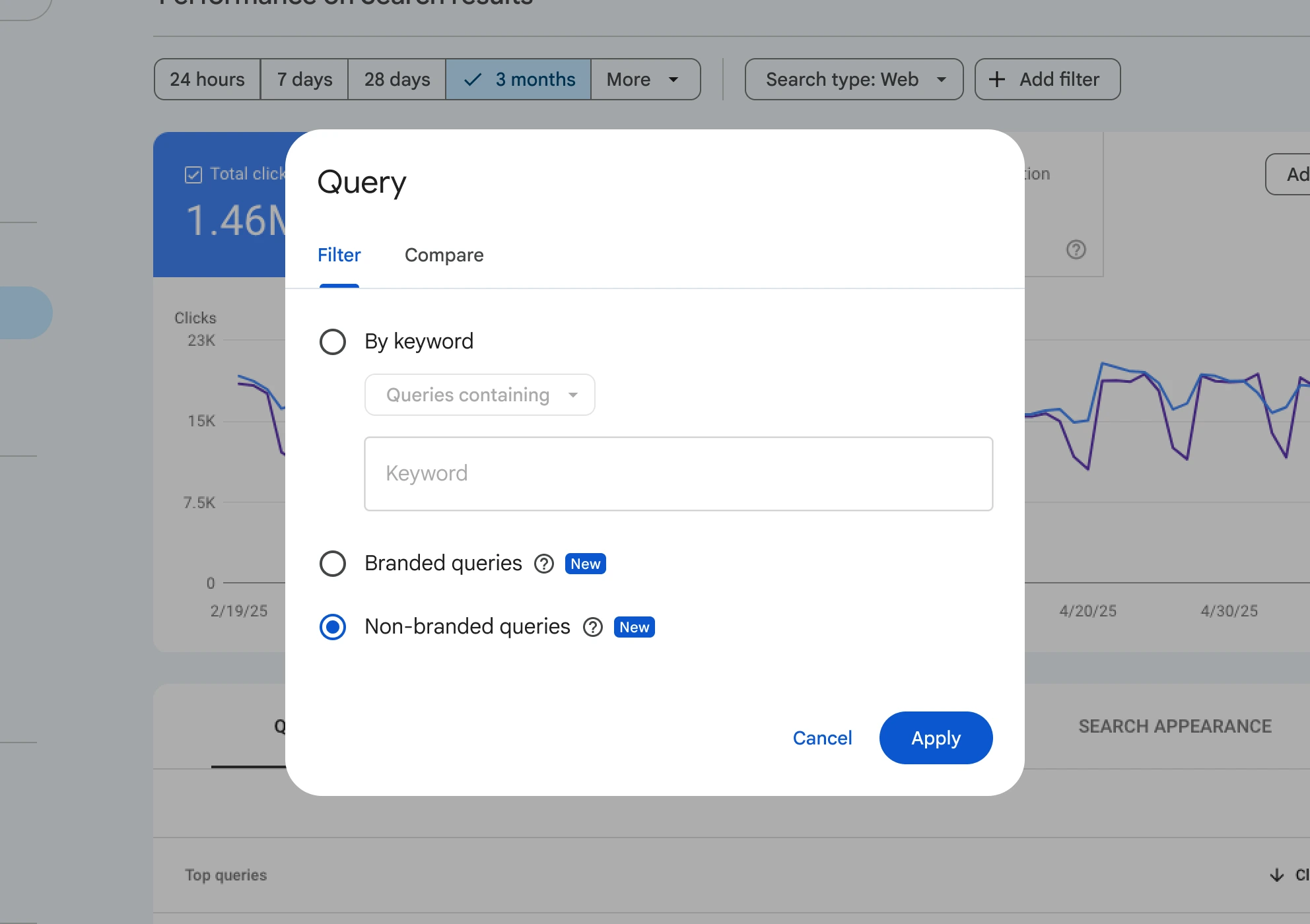
Once classified, the filter separates impressions, clicks, CTR, and average position into branded and non-branded groups. A new Insights report card also displays the breakdown of total clicks between the two categories. The filter works across all search types: web, image, video, and news.
The feature requires your site to be verified as a full domain property in Search Console (not a URL path or subdomain property) and needs enough query and impression volume to activate.
How to check and use the branded filter in Search Console
Open the Performance report in Search Console for your domain property. The branded filter appears alongside existing filters at the top of the report. Select it to toggle between branded, non-branded, or both views. Each view shows separate impressions, clicks, CTR, and average position data.
The Insights section on the Search Console overview page now includes a report card showing the split of total clicks between branded and non-branded queries. That card provides a quick read on how much of your organic traffic comes from people already searching for your brand versus discovering your content through non-branded terms.
For sites that do not yet see the filter, the most common reasons are insufficient query volume or verification as a subdomain or URL path property rather than a full domain. Consolidating to a domain-level property in Search Console will make the filter available once volume thresholds are met.
Part of a broader Search Console update cycle
The branded queries filter is one of several recent Search Console improvements. In December 2025, Google introduced Query Groups for organizing search queries into custom categories. The AI configuration tool, which lets users describe Performance reports in natural language, rolled out globally in February 2026.
Together, these updates signal Google's investment in making Search Console analytics more granular and accessible. The branded filter specifically addresses one of the most requested reporting gaps: distinguishing between traffic from brand awareness and traffic from content strategy. For brands running both SEO and paid search you now get clean separation of branded vs. non-branded organic data.

Mahnoor on why the filter matters for SEO planning.
“For years, brand searches have been inflating reports and masking real SEO performance. From a performance marketing lens, this is huge because brand traffic is demand you’ve already created, but non-brand traffic is where you’re actually competing.”

Recap
How does Google Search Console classify branded queries?

Google uses an AI-assisted system that automatically identifies branded queries, including the brand name, common misspellings, and brand-related products or services. For example, "Gmail" is classified as a branded query for Google. The system does not rely on regex or manual keyword matching.
Which Search Console properties can use the branded queries filter?
The branded queries filter is available for full domain properties only. Subdomain and URL path properties do not support the feature. Sites also need sufficient query and impression volume to activate the filter.
What data does the branded vs. non-branded filter show in Search Console?
The filter separates impressions, clicks, click-through rate, and average position into branded and non-branded categories. A new Insights report card also shows the breakdown of total clicks between the two groups. The filter works across web, image, video, and news search types.

 Free tool · Meta Ad Library