





.webp)



Instagram is extending its video strategy past short-form Reels into the longer, lean-back formats that define living-room viewing. The company is testing longer-form creator content, episodic series, and live broadcasts built for the TV screen, a sign that its connected TV app is less about moving Reels to a bigger display than about competing for the sustained attention that YouTube and the streaming services command.
That ambition rests on Instagram's short-form foundation. Reels is the platform's answer to TikTok and YouTube Shorts, and it is the viewing habit Instagram is now trying to stretch into longer sessions. The company said it is exploring formats designed for the living room, built around how people watch on a television rather than a phone.
The Living-Room Formats in Testing
Instagram named three formats it plans to start rolling out soon. Longer-form creator content is meant to give creators room to tell deeper stories than a short clip allows. Episodic series would unfold across multiple installments, which Instagram says builds on viewing behavior it has already seen on its mobile app. Live on TV would put live creator broadcasts on the big screen.
The platform says it is developing these formats with creators to learn what works in a living-room setting. Instagram has already tested episodic, TikTok-style series inside Reels on mobile, and the TV push extends that experiment to a larger canvas.
The Distribution Layer
The format work is paired with wider distribution. Instagram for TV is now available on Samsung Smart TVs from the 2020 model year onward in the U.S. Combined with Amazon Fire TV and Google TV, the app now reaches most CTV devices in the country.
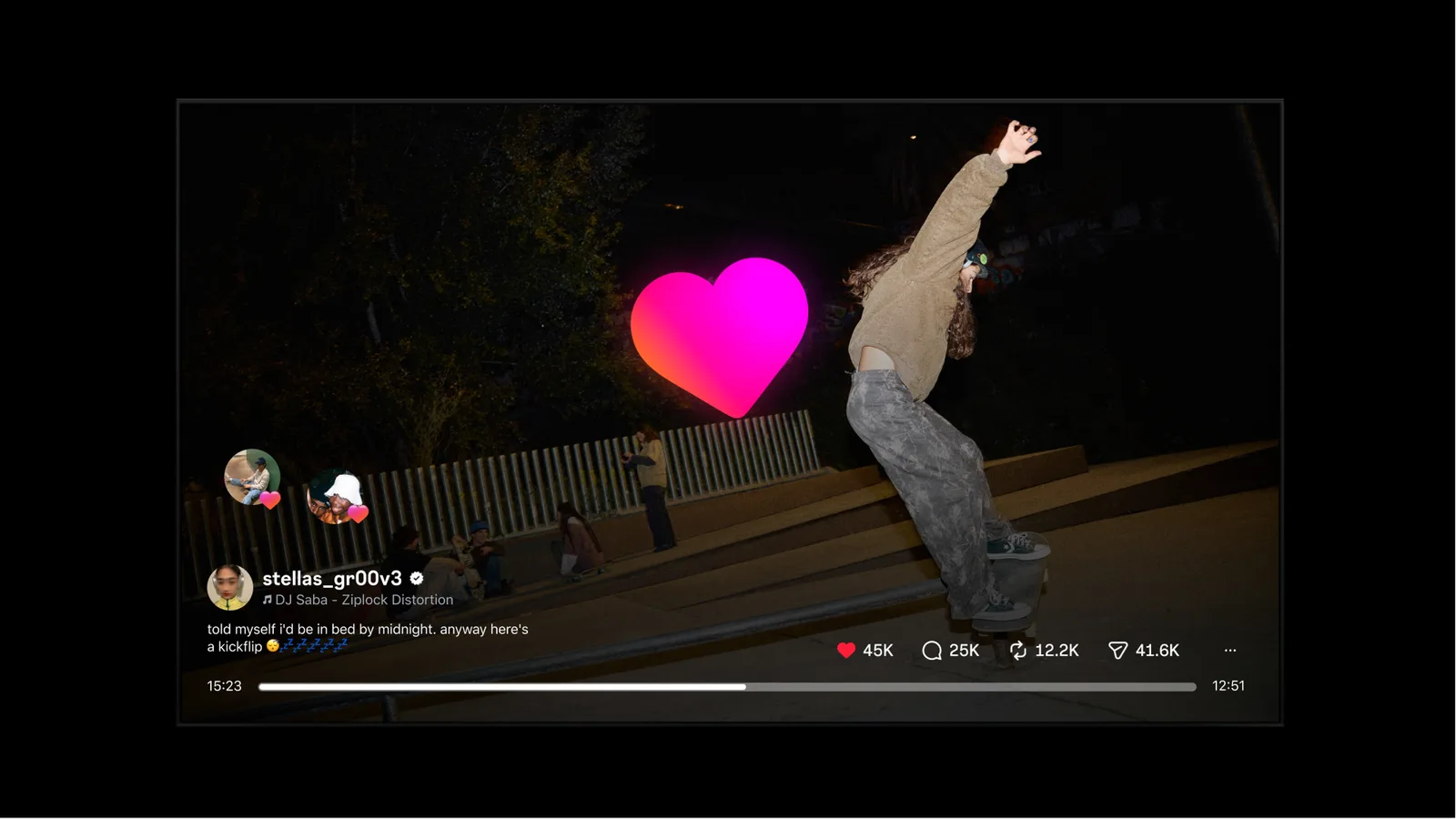
Instagram for TV first launched in 2025. Alongside the Samsung rollout, Instagram is testing interest-based channels for categories such as comedy and sports, the ability to cast Reels from a phone to the TV, Stories on the big screen, and a dedicated home for horizontal video.
Why the Living Room Is the Next Battleground
The strategic logic is the movement of viewing and ad budgets to CTVs. U.S. CTV ad spending is projected to reach about $38 billion in 2026, and CTV upfront commitments are expected to surpass primetime linear television for the first time this year, at roughly $17.73 billion against $16.98 billion, according to eMarketer.
The shift reflects where audiences now spend their time. Streaming and digital video have pulled viewing away from traditional cable, and the living-room screen has become the place where the largest blocks of attention, and the advertising that follows them, are concentrated.
Longer-form, episodic, and live formats are the content types that fit that setting, which is why a platform built on quick vertical clips is now investing in them.
Competing With YouTube and the Streamers
The competitive target is clear. YouTube accounted for 12.4% of U.S. television viewing in April 2025, the largest share of any media company, according to Nielsen, a position built on long-form and creator video watched on the TV screen. YouTube has pressed that advantage with TV-first ad products pitched at its living-room reach. Netflix, the dominant subscription streamer, has built an ad-supported tier that it says reaches around 250 million monthly viewers, bringing a second large pool of CTV ad inventory to market.
Instagram enters that field from a different starting point, with a creator base and a mobile audience it can route to the television, but the formats it is testing map directly onto the long-form, episodic, and live content that anchors both YouTube and the streamers. The horizontal-video test is the clearest signal. It reverses the vertical orientation that defines Reels and points to a product built for the screen on the wall rather than the one in the hand.
What It Means for Creators and Advertisers
For creators, longer-form, episodic, and live formats open production styles that short vertical clips do not support, along with a new surface to reach audiences on the largest screen in the home.
For advertisers, a TV-native Instagram could eventually offer streaming-style inventory in the environment where CTV budgets are expanding, though Instagram has not announced ad formats tied to the TV app.
The nearer-term value is reach. Instagram's audience now extends across most U.S. CTVs, and the move toward longer sessions could change how brands plan for the platform beyond the Reels feed.
Recap
What is Instagram changing about its TV app?

Instagram has expanded Instagram for TV to Samsung Smart TVs in the US and is testing new shared-viewing features, while signaling a broader move into longer-form, episodic, and live video built for the living room.
How will the new long-form and episodic formats work?
The formats are designed for TV rather than mobile viewing. Longer-form content gives creators more runtime, episodic series unfold across multiple installments, and Live on TV brings real-time creator broadcasts to the big screen. Instagram says it is developing them with creators and aims to begin rolling them out soon.
What does the shift mean for creators and advertisers?
Creators gain production styles and a TV surface that vertical short-form does not support, and advertisers gain potential access to streaming-style inventory as Instagram's reach extends across most US connected TVs, though no TV ad formats have been announced.