





.webp)



Microsoft is building AI-powered diagnostics into its advertising platform, using Copilot to identify why campaign performance shifted and whether conversion tracking is configured correctly.
In a blog post, the company outlined the diagnostic tools along with expanded LinkedIn targeting, creative controls, and a new attribution model that build on the AI Max for Search and UCP feed updates Microsoft introduced this week.
Copilot Now Explains Performance Changes and Tracking Issues
Copilot inside the Microsoft Advertising Platform now includes two diagnostic tools. Performance Shift Root Cause Analysis helps advertisers understand why campaign results change. The tool goes beyond flagging that performance went up or down. According to Microsoft, it identifies whether those changes are connected to ad delivery issues, bidding strategy shifts, or competitive pressure, giving advertisers a clearer starting point for diagnosis.
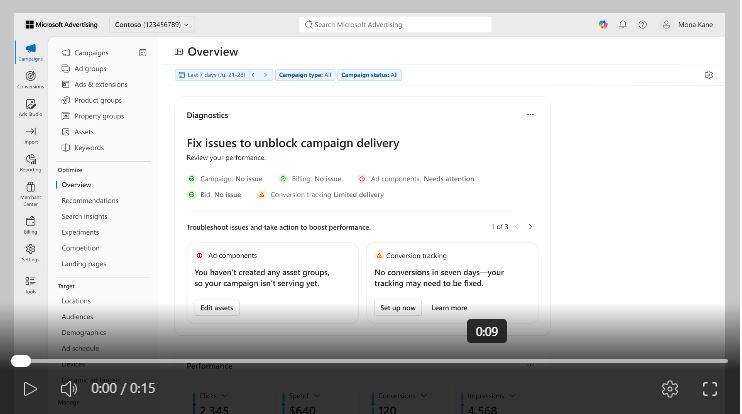
The second tool, Conversion Tracking Diagnostics, is focused on measurement. It reviews whether Universal Event Tracking (UET) tags and conversion goals are set up correctly. The purpose is to catch configuration issues early, before they affect how campaign performance is tracked and reported.
LinkedIn Profile Targeting Expands to Search Ads
Microsoft is expanding LinkedIn Profile Targeting to Search ads in a pilot across the U.S. and Canada. The expansion adds Job Seniority Levels, covering 10 levels including CXO, VP, and Director, and Custom Company Lists that let advertisers target based on criteria like event attendance or account-based marketing prospects.
New Controls for AI-Generated Ads
The company is also introducing controls for advertisers using AI-generated ad copy in Performance Max and Responsive Search Ads. Term Exclusions let advertisers specify exact terms to omit from AI-generated ads, ensuring brand-sensitive or legally restricted language never appears.

Messaging Constraints go broader, allowing advertisers to define brand, legal, and product guidelines that AI-generated assets must follow. These features are being piloted globally later this month, with China excluded from the rollout.

Data-Driven Attribution Replaces Last-Click
Microsoft is rolling out Data-Driven Attribution, which assigns credit across the full customer journey rather than relying on last-click. Google made Data-Driven Attribution its default model after removing four legacy attribution models in October 2023. Microsoft's rollout aligns its measurement capabilities with what Google has already standardized.
Recap
What are Microsoft Copilot ad diagnostics?

Copilot inside the Microsoft Advertising Platform now includes two diagnostic tools. Performance Shift Root Cause Analysis identifies underlying causes of campaign performance fluctuations, surfacing whether changes stem from ad delivery, bidding, or competition. Conversion Tracking Diagnostics validates that UET tags and conversion goals are configured correctly, catching setup issues before they affect results.
What is LinkedIn Profile Targeting for Search ads?
LinkedIn Profile Targeting for Search ads lets advertisers layer professional demographic targeting onto search campaigns. Microsoft says the pilot in the U.S. and Canada adds Job Seniority Levels across 10 levels including CXO, VP, and Director, and Custom Company Lists based on criteria like event attendance or account-based marketing prospects.
What are Term Exclusions and Messaging Constraints in Microsoft ads?
Term Exclusions let advertisers specify exact terms to omit from AI-generated ad copy. Messaging Constraints go broader, allowing advertisers to define brand, legal, and product guidelines that AI-generated assets must follow. Microsoft says both are piloting for Performance Max and Responsive Search ads globally, excluding China.